
Key Takeaways
- Strategic Alignment & ROI: AI initiatives should integrate into enterprise architecture to improve success rates and deliver business value.
- The Necessity of a Semantic Layer: Pointing LLMs at raw databases fails; a robust semantic layer and glossary are essential.
- Decision-Centric Modelling: Architecture should prioritise business decisions to clarify Critical Data Elements and enforce data quality.
- The V-Model and Context Graphs: Use a V-model approach; escalate uncertain AI decisions to humans for rationale recording.
- Automated and Evidentiary Governance: Advanced AI needs continuous governance, traceability meshes, and automated gates for immediate safety compliance.
- Combating Context ROT: AI models can suffer from context rot; training data integrity must be rigorously monitored.
- Scoping for Success: Rapid ROI demand threatens AI strategy; focus on high-impact use cases for sustainable value delivery.
- Leveraging AI for Visual Assets: AI tools can rapidly create presentations and infographics with accurate foundational data from users.
Webinar Details
Title: Is your Semantic Model truly AI Ready for Data Executives
Date: 2026-03-19
Presenter: Howard Diesel
Meetup Group: African Data Management Community
Write-up Author: Howard Diesel
How can Enterprise Architecture Effectively Integrate AI Technologies in the Insurance Sector?
Building an enterprise architecture equipped for Artificial Intelligence requires transitioning from isolated experimental projects to integrated, strategically aligned frameworks. Within the insurance sector, automating the claims process—from the initial notice of loss through final settlement—serves as a primary use case. Organisations face a clear mandate to improve the return on investment (ROI) of AI initiatives, especially given failure rates estimated at 70%-95%.
A fundamental catalyst for these failures is the direct application of Generative AI or Large Language Models (LLMs) to raw databases, which frequently suffer from poor data quality, ambiguous nomenclature, and deficient metadata. Consequently, enterprise architecture must be deliberately designed to address defined business objectives, such as automating claim triage, reducing fraudulent settlements by 15%, and elevating customer satisfaction metrics.
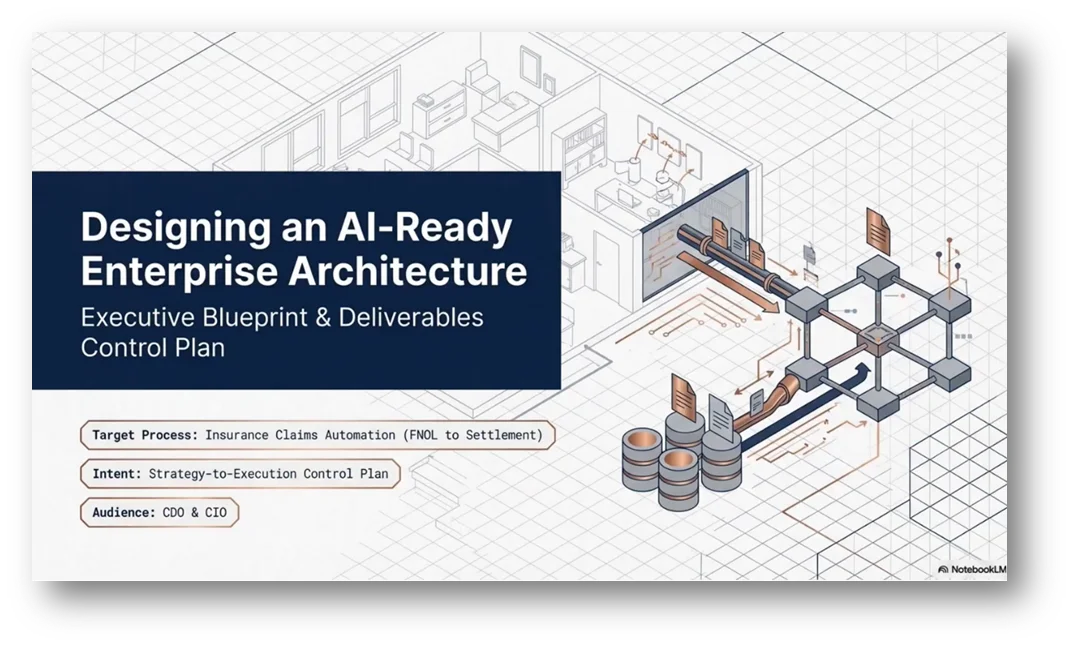
Figure 1 Designing an AI-Ready Enterprise Architecture

Figure 2 The Business Mandate: Target State ROI
What role does a rigorous semantic layer play in data preparation?
To optimally prepare organisational data for AI, establishing a rigorous semantic layer and information architecture is imperative. Employing structured frameworks, such as the Intra-align methodology and Subject-Predicate-Object (SPO) statements, facilitates the development of unambiguous business glossaries and comprehensive ontologies. Leveraging AI tools like Copilot can systematically assist in formulating accurate, structured definitions for core terms, such as “policyholder”.
This systematic resolution of linguistic ambiguity is a prerequisite for effective conceptual data modelling. Ultimately, this semantic layer functions similarly to traditional business intelligence architecture, serving as an intermediary that translates complex technical database schemas into unified business terminology, thereby ensuring precise comprehension by both human stakeholders and automated agents.

Figure 3 The 6-Layer Architecture Blueprint

Figure 4 Policyholder – Full Business Definition ( 6-Friends)

Figure 5 Policy – Semantic SPO Graph

Figure 6 Business Glossary
What is the Significance of the “V-Model” of Testing in Technology Architecture?
Once a robust semantic foundation is established, organisations can systematically outline data flows and engineer the corresponding technology architecture. The foundational “V-model” of testing provides an effective paradigm: high-level business requirements and policies dictate parameters downward, while empirical data signals—such as automated claim severity scores—flow upward to validate compliance against established business controls.
Recognising that automated systems cannot autonomously process all complex variables, structured human-in-the-loop escalations remain necessary. When automated confidence thresholds are unmet, interventions must occur. Critical to this process is the “context graph,” an architectural component that documents the rationale, underlying assumptions, and regulatory considerations governing human decisions. This structural requirement mandates a shift from rigid, flat data tables toward integrated ontologies.

Figure 7 Bridging Strategic Logic with Operational Data Signals

Figure 8 The Blueprint for an AI-Ready Enterprise

Figure 9 The Paradigm Shift: Rethinking Enterprise Architecture
What Role Does Decision Modelling Play in Business Architecture?
A critical dimension of business architecture is the formalisation of decision modelling. Historically, analytical initiatives focused predominantly on process mapping and data retrieval, frequently neglecting the foundational inquiry: what precise business decision requires facilitation. Centring architecture on explicit decisions compels stakeholders to rigorously evaluate both strategic objectives and the inherent business risks of suboptimal outcomes.
By formally defining the specific informational inputs necessary for pivotal decisions, data governance teams can precisely identify Critical Data Elements (CDEs) and subsequently enforce rigorous data quality standards. Consequently, the discipline of decision science is experiencing a resurgence in strategic importance, evidenced by the emergence of specialised executive roles dedicated exclusively to data decision science.

Figure 10 Layer 1: Business Architecture
What Components must Technology Architecture Manage for Effective AI Integration?
Executing a comprehensive AI strategy necessitates a multi-layered architectural framework. Information architecture requires formalised glossaries, taxonomies, and metadata parameters. Data architecture is predicated on subject-area models, logical flows, and reference data frameworks. Simultaneously, the technology architecture must manage component catalogues, security infrastructure, and operational models, including ML Ops, that can process continuous data streams.
The integration of these advanced layers proportionally escalates the imperative for uncompromising governance protocols. Essential governance artefacts now encompass model operational cards, algorithmic-bias auditing, systematic-drift monitoring, and traceability matrices. Furthermore, if an AI model deviates from acceptable operational parameters, automated evidentiary governance frameworks must be enabled to immediately excise the model from production environments, mitigating risk without requiring manual intervention.

Figure 11 Layer 2: Information Architecture

Figure 12 Layer 3: Data Architecture

Figure 13 Layer 4: Technology Architecture

Figure 14 Architecture in Action: The Auto Hail Claim

Figure 15 Master Schematic: The Claims Automation Pipeline

Figure 16 Layer 5: Unified Governance and Assurance
What is a “Traceability Mesh,” and why is it Important for Organisations?
An advanced knowledge architecture dictates that artificial intelligence agents interface strictly with a governed semantic model rather than interacting directly with unrefined SQL databases. Direct database access risks generating disparate or contradictory outputs, dependent entirely on the localised calculation parameters of disparate systems. To enforce systemic consistency, organisations must architect a comprehensive “traceability mesh”.
This construct systematically links high-level business requirements—such as reducing triage cycle times—directly to subordinate critical data elements, specific technological routing components, and precise automated governance controls. This end-to-end alignment ensures that governance protocols can proactively identify escalating error rates, allowing engineering units to efficiently retract, retrain, and redeploy machine learning models with minimal operational disruption.

Figure 17 Data Governance & Security Controls

Figure 18 Layer 6: Knowledge Architecture

Figure 19 Enterprise Standard and Framework Traceability

Figure 20 Built on Global Industry Standards

Figure 21 The Traceability Mesh: End-to-end Alignment

Figure 22 The Paradigm Shift: Govern-by-wire
What is “Context Rot” in AI Model Deployment?
A pronounced systemic risk inherent in sustained AI model deployment is “context rot,” defined as the consistent degradation of model performance as input data volumes expand. Progressively, iterative outputs can devolve into an insular “echo chamber,” culminating in complete operational collapse, in which the system perpetually generates invalid logic. To counteract this phenomenon, organisations must rigorously monitor the qualitative integrity of the training corpus utilising deterministic probes and statistical process control methodologies.
By analysing localised metadata, such as progressive decay rates, analysts can mathematically project impending model failure. Crucially, artificial intelligence cannot be designated as the principal mechanism for evaluating the viability of its own training corpora. Robust human oversight and automated, real-time decision gating remain non-negotiable requirements for sustaining architectural integrity.

Figure 23 The Executive Audit Pack
How do Specialised Generative Applications Transform Conceptual Outlines?
In addition to enterprise-scale applications, AI tooling optimises internal corporate communications and the development of documentation. Contemporary workflows leverage platforms like Copilot and Claude to strategically synthesise core thematic elements and outline facilitator parameters. Subsequently, specialised generative applications, such as GenSpark and Gamma, transform these conceptual outlines into highly formatted, editable presentation assets.
Furthermore, utilities like NotebookLM are heavily utilised to process expansive source materials—preferentially standardised as PDFs or integrated via Google Drive to mitigate systemic compatibility issues—to autonomously render robust study materials, visual infographics, and complex visual representations. However, while these tools substantially accelerate the production of high-fidelity visual assets, absolute priority must remain upon the validation and accuracy of the foundational data inputs preceding generative execution.

Figure 24 Project Deliverables Master Dashboard
How should Enterprises Identify and Target Localised “Black Holes” in Knowledge?
A dominant vulnerability within enterprise AI implementations is the corporate expectation for immediate ROI, which routinely categorises extended development cycles as project failures. To sustain viability, data architecture divisions must functionally integrate with overarching business operations rather than operate in isolation as an IT function. Long-term strategic success relies on the rigorous limitation and governance of AI use-case scoping.
Implementations must surgically target discrete business inefficiencies—characterised as localised “black holes” in enterprise knowledge—rather than deploying expansive, monolithic initiatives. By prioritising compartmentalised, technically feasible projects that resolve singular process issues, organisations can iteratively deliver compounding business value, safeguard stakeholder confidence, and insulate against corporate amnesia.
- Key Takeaways
- How can Enterprise Architecture Effectively Integrate AI Technologies in the Insurance Sector?
- What role does a rigorous semantic layer play in data preparation?
- What is the Significance of the "V-Model" of Testing in Technology Architecture?
- What Role Does Decision Modelling Play in Business Architecture?
- What Components must Technology Architecture Manage for Effective AI Integration?
- What is a "Traceability Mesh," and why is it Important for Organisations?
- What is "Context Rot" in AI Model Deployment?
- How do Specialised Generative Applications Transform Conceptual Outlines?
- How should Enterprises Identify and Target Localised "Black Holes" in Knowledge?


