
Key Takeaways
- Toward “Socratic Dialogue”: Traditional BI tools often sit unused, and analytics is shifting toward interactive dialogue for decision-making instead.
- A curated semantic layer isn’t optional: conversational AI needs curated data layers and quality marts to produce accurate, reliable outputs.
- Excel is a symptom, not a pipeline: heavy manual spreadsheet use points to fragmented systems, and managers need to own the migration to automated platforms.
- Secure AI needs solid foundations: standardised database connections and AI logs are what keep enterprise systems accountable and compliant.
- The “duck woofing like a dog” problem: data teams shouldn’t expect probabilistic LLMs to behave like deterministic databases, which is exactly why human oversight still matters.
- The three-part value test: does the AI project make money, save money, or save time? That’s what should drive evaluation.
Webinar Details
Title: Goodbye Dashboards, Hello Dialogue: The Future of Analytics Is a Conversation with Simon Stewart
Date: 2026-08-17
Presenter: Simon Stewart
Meetup Group: DAMA SA Big Data
Write-up Author: Howard Diesel
Is Analytics Evolving Towards Interactive Socratic Conversations?
The future of analytics is moving away from static, rigid dashboards toward interactive, real-time Socratic conversations. Simon Stewart, a forward-deployed engineer, frames that shift as a collaborative journey, one that requires continuous adaptation and genuine debate among data practitioners.
With the technology landscape changing so fast, professionals can’t lean on static formulas anymore. The webinar works as an open forum for exploring where analytics is headed, and it welcomes disagreement as a way of testing conventional corporate assumptions.
Rather than handing down answers, this collaborative approach helps organisations work out where decision-making is genuinely heading. It’s less about generating reports and more about how teams engage with data to drive business value.
Key Takeaways
- Modern analytics is shifting from passive dashboard consumption to active Socratic dialogue.
- Technological acceleration means data strategies must be continuously updated and tested in real-world scenarios.
FAQ
- Why is analytics moving toward a conversational format? Conversational interfaces allow business users to dynamically discuss, query, and refine data in real time, rather than relying on static, pre-packaged reports.
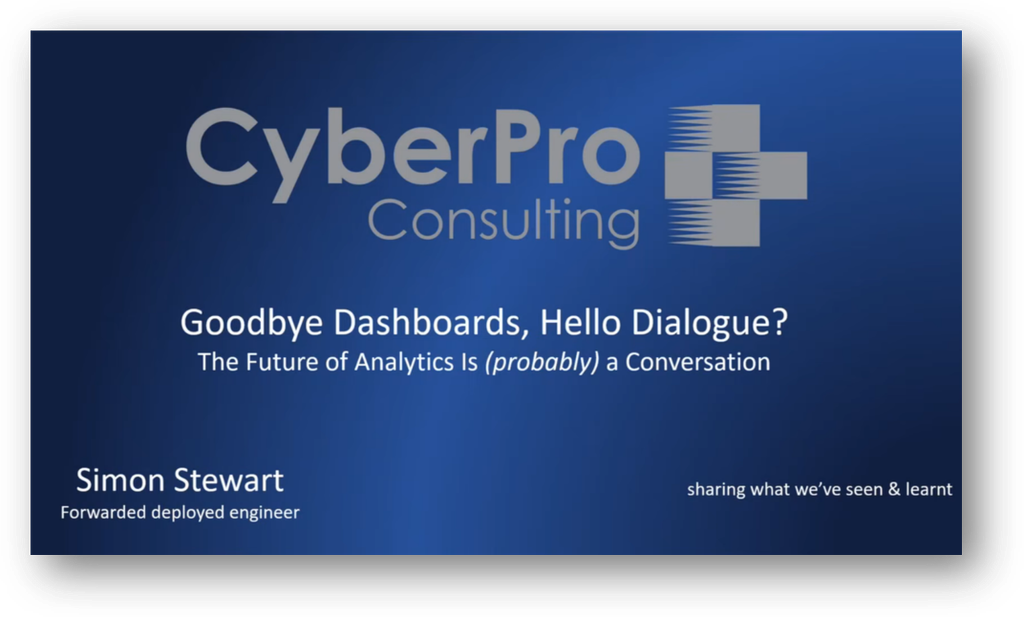
Figure 1 Goodbye Dashboards, Hello Dialogue?

Figure 2 Finding Alternative Uses for Products
How is Rapid Innovation Transforming Enterprise Data Today?
Recent breakthroughs mean development teams can now build and deploy complex analytical systems in a single week, work that used to take an entire year. That kind of reduction in development cycles opens the door to rapid, ad-hoc innovation that sidesteps traditional corporate bureaucracy.
Stewart illustrates creative tool use with the ‘surf report hack,’ where an 80s answering machine got repurposed to broadcast public surf conditions. It’s a good example of how users naturally find high-value, unintended use cases once they’re given flexible, accessible tools.
That same spirit of rapid innovation is now showing up in enterprise data. Developers, for instance, are already building automated stock-trading systems using Anthropic’ s Claude, capable of analysing market data and executing trades ahead of human competitors.
Key Takeaways
- Compressed development cycles allow teams to prototype and launch functional analytical apps in days.
- Business users naturally innovate and repurpose tools when freed from bureaucratic bottlenecks.
FAQ
- How does rapid AI tooling impact traditional development timelines? It allows developers to bypass long development queues and build high-impact applications in a fraction of the time.

Figure 3 “How Did we Get Here?”
How has Data Analytics Transformed Decision-making Roles?
Data analytics has moved from static paper reports to interactive Socratic dialogue, putting decision-making power directly into the hands of business users. That shift changes the user’s relationship with data too, from simply receiving the truth to actively discussing it.
Corporate data has progressed from paper-based TPS reports to Excel spreadsheets, then to centralised BI dashboards, and now to modern chatbot interfaces. Along the way, users moved from receiving static truth, to editing it, to refreshing it, and now to actually discussing it.
That Socratic dialogue moves the user closer to the decision point, which is why professional roles are shifting too, from pure report writers toward hybrid business analysts who understand both business logic and data curation.
Key Takeaways
- The analytical journey moves from passive consumption (paper, BI) to active data collaboration (chatbots).
- Modern data roles require a blend of analytical expertise, visualisation skills, and business domain knowledge.
FAQ
- What is a Socratic conversation in data analytics? It is an interactive query process where an automated assistant guides a user to find evidence-based answers to business questions.

Figure 4 What we’re Seeing
How can Organisations Overcome Dashboard Engagement Challenges?
Organisations face a dual challenge here: underused ‘dashboard graveyards’ on one side and untapped ‘dark data’ on the other, both because static reports don’t really support active business decisions. Turning self-service AI loose without a properly curated semantic layer just produces inaccurate, untrusted visualisations.
Plenty of dashboards see extremely low engagement, sitting forgotten in corporate directories somewhere. Business users often carry a quiet anxiety too, the fear of getting in trouble for making decisions based on reports nobody’s actually verified.
Building trust means backing AI tools with a solid data foundation and genuinely high-quality data marts. Turning AI loose on raw ERP systems is little more than a vanity project unless it’s sitting on a verifiable semantic layer.
Key Takeaways
- Dashboard graveyards represent underutilised assets that fail to address real-world decision anxiety.
- A strong semantic model and gold data marts are mandatory prerequisites for reliable AI self-service.
FAQ
- What causes a dashboard graveyard? Dashboards become graveyards when they are built without a clear link to specific business decisions or when users fear acting on the data.
- Why is a semantic layer necessary for AI self-service? It provides a verified dictionary of terms and relationships, ensuring the AI-generated visuals are accurate and grounded.

Figure 5 In the Past, Business Analysts Getting Plenty of Queries from the Business

Figure 6 And now, with Generated Dashboards.

Figure 7 What’s Driving this Change?
How do Low-code Platforms Enhance Business Analytics Flexibility?
Modern analytics architectures lean on low-code platforms and AI-centric developer frameworks to narrow the gap between technical expertise and business operations. Shifting report formats from binary files to text-based Markdown also makes visualisations cheaper and easier for AI to work with.
Major data vendors are competing hard in the developer space right now. Solutions like Microsoft Fabric, Snowflake’s Streamlit, and Databricks let developers spin up cheap, custom applications quickly on top of existing semantic layers.
From the business side, the main drivers are ad-hoc flexibility, user empowerment, and owning the intellectual property outright. Integrating Teams or Slack bots meets users where they already work, allowing ad-hoc analysis without waiting on an IT backlog.
Key Takeaways
- File formats like Power BI’s text-based folders make reports highly machine-readable for AI agents.
- Low-code developer frameworks allow rapid deployment of mini-applications over curated data platforms.
FAQ
- Why is Markdown important for AI integrations? Markdown is text-based and structured, making it easy and computationally cheap for AI models to interpret and modify.

Figure 8 Where does Excel Fit in?
Is Excel Reliance Harming Your Data Integrity?
Heavy reliance on Excel spreadsheets is really a symptom, a sign of missing data pipelines and fragmented corporate systems underneath. Manually manipulating data in spreadsheets introduces real human error and wipes out data provenance in the process.
Excel itself is repeatable and flexible, sure, but using it as a primary data integration layer is genuinely risky. When people manually assemble data from disparate systems by hand, they end up creating unchecked, dead-end copies of the truth that can never feed back into core systems.
The fix is formal spreadsheet governance: department managers documenting and personally owning every Excel sheet, with clear roadmaps for migrating that functionality onto permanent, governed platforms.
Key Takeaways
- Widespread Excel usage reveals underlying gaps in automated data pipelines.
- Spreadsheet governance requires formal business ownership, documentation, and migration roadmaps.
FAQ
- What are the risks of using Excel as a data pipeline? It relies on manual human processes, which increases the risk of error, breaks data provenance, and creates isolated data silos.

Figure 9 And is there an Issue with Excel?
How are Chatbots Transforming Corporate Data Interactions?
Chatbots are becoming genuinely powerful interfaces for corporate databases, letting business users dynamically query, pivot, and explore data trends. A trustworthy chat interface must substantiate what it says too, linking directly back to the underlying evidence and source records.
A poorly configured chatbot is genuinely frustrating but connect one to properly curated systems and it delivers real value. Instead of forcing users to export tabular data into Excel for manual pivoting, interactive chat interfaces can just handle those complex operations natively.
In proof-of-concept projects built for CRM and ATS platforms, interactive chat screens let executives view trends and act on them directly. These interfaces even include ‘ejection buttons’ that drop users straight into the raw database record when they need it.
Key Takeaways
- Interactive chat interfaces help users explore ad-hoc questions without overloading dashboards.
- Chatbots must display the underlying reasoning and evidence behind their presented data.
FAQ
- Will chatbots completely replace business dashboards? No. Chatbots and dashboards work together; dashboards present repeatable, deterministic figures, while chatbots handle ad-hoc querying.

Figure 10 Step 1: Reports

Figure 11 Step 2: Dashboards

Figure 12 Step 3: Chatbots?

Figure 13 Is a Chatbot the Answer?

Figure 14 Using a Chatbot for Sales Data

Figure 15 Or Requesting Information on Possible Problems

Figure 16 Follow-up Requests

Figure 17 The UI is the Easy Part?
How can we Secure Enterprise AI Effectively?
Building secure enterprise AI takes solid architecture foundations, Model Context Protocol (MCP) servers, small language models, and automated guardrails among them. Organisations also need to capture a precise record of exactly what evidence supported any AI-assisted decision.
Uncontrolled AI deployments can lead to genuinely severe system failures. Preventing that means enforcing strict API access through tools like AWS Cedar and installing automated kill switches that sever integrations the moment database thresholds get breached.
Filtering out speculative AI projects takes a practical business test: every AI initiative needs to prove its concrete value by showing it either makes money, saves money, or saves time.
Key Takeaways
- Model Context Protocol (MCP) servers provide secure, standardised database connections for AI models.
- AI systems must feature automated kill switches and Cedar-style policies for system safety.
FAQ
- What is an AI kill switch? An automated safety control that disconnects an AI chatbot from core transactional databases if error rates exceed a set limit.
- How can organisations verify AI-supported decisions? By maintaining strict log records of the exact timestamps, inputs, and database states that the AI referenced.

Figure 18 Measuring Success

Figure 19 Where do you Think all of this is Heading?
How do we Balance Structure with AI Uncertainty?
Enterprise decision-making must balance deterministic systems for structured metrics against probabilistic LLMs for natural language exploration. Generative AI engines introduce real variance, which is exactly why ultimate corporate accountability needs to stay with human managers.
Data practitioners warn against forcing probabilistic tools into deterministic tasks, a mismatch one described as ‘trying to make a duck woof like a dog.’ Traditional database code is predictable; generative systems, by contrast, can fail quietly or hallucinate outright.
Building trust means rigorous logging, auditing, and pre-training on custom data. Technology can support operations, in the end, but a human still needs to remain accountable for any high-consequence business outcome.
Key Takeaways
- Dashboards are superior for deterministic metrics, while LLMs excel at flexible, natural language ad-hoc queries.
- Organisations must adjust to fast technology cycles without offloading legal accountability to AI.
FAQ
- What is a probabilistic system in AI? system that produces outputs based on statistical likelihoods rather than rigid logic, meaning it can generate slightly different answers to the same query.
- How can teams reduce variance in AI analytics? By constraining the AI using a highly curated enterprise semantic model and verified data marts.
- Key Takeaways
- Is Analytics Evolving Towards Interactive Socratic Conversations?
- How is Rapid Innovation Transforming Enterprise Data Today?
- How has Data Analytics Transformed Decision-making Roles?
- How can Organisations Overcome Dashboard Engagement Challenges?
- How do Low-code Platforms Enhance Business Analytics Flexibility?
- Is Excel Reliance Harming Your Data Integrity?
- How are Chatbots Transforming Corporate Data Interactions?
- How can we Secure Enterprise AI Effectively?
- How do we Balance Structure with AI Uncertainty?


