

Key Takeaways
- The Critical Role of the Lexical Gate: Data professionals often overlook the lexical layer, resulting in flawed business glossaries and semantics.
- Separating Expression from Meaning: The lexical layer acts as an inventory, isolating strings and labels before attaching meaning.
- Protecting Data Context: Data acquires context from various processes, making its original meaning crucial for accurate downstream reporting.
- Solving Polysemy with AI: Polysemous words like “party” or “bank” need clear definitions for accurate data management.
- Internal Lexicons and the Ontic Layer: Departments need localised data definitions linked to the ontic layer for mapping semantic concepts.
- Human Bias in Data Quality: Data accuracy and syntax are influenced by the original observer’s biases and modelling choices.
- Structured Lexical Classification: Creating a lexicon involves categorising terms logically and mapping hierarchies through structured frameworks.
- Limitations of Automation and M&A Risks: Automated glossary tools may misclassify concepts; human oversight is essential for maintaining data integrity.
- Securing Executive Buy-In: Data teams should focus on targeted business processes for quick ROI and executive buy-in.
Webinar Details
Title: Glossary & Semantic Workbench for Data Executives
Date: 2026-06-25
Presenter: Howard Diesel
Meetup Group: African Data Management Community
Write-up: Author Howard Diesel
Are Foundational Lexical Gates Often Overlooked in Modelling?
Many data professionals skip the foundational “lexical gate” when building semantic models, leading to structural flaws in business glossaries. Building data architectures requires more than just assigning meaning to business terms.
Data modellers frequently dive straight into the semantic layer, focusing on meaning and relationships, while completely ignoring the preliminary steps of word disambiguation. This oversight can compromise months of glossary development across an enterprise.
The solution begins at “Level 0,” also known as the lexical gate. By explicitly acknowledging this missing step, organisations can prevent fundamental misalignments in their enterprise data systems.
Key Takeaways
- Data modelling often incorrectly bypasses the lexical layer.
- Skipping word disambiguation creates flawed business glossaries.
- “Level 0” must be addressed before moving to semantics.
FAQ
- What is the lexical gate? The lexical gate, or Level 0, is the foundational step in data modelling that focuses on resolving word ambiguity before defining structural meaning.
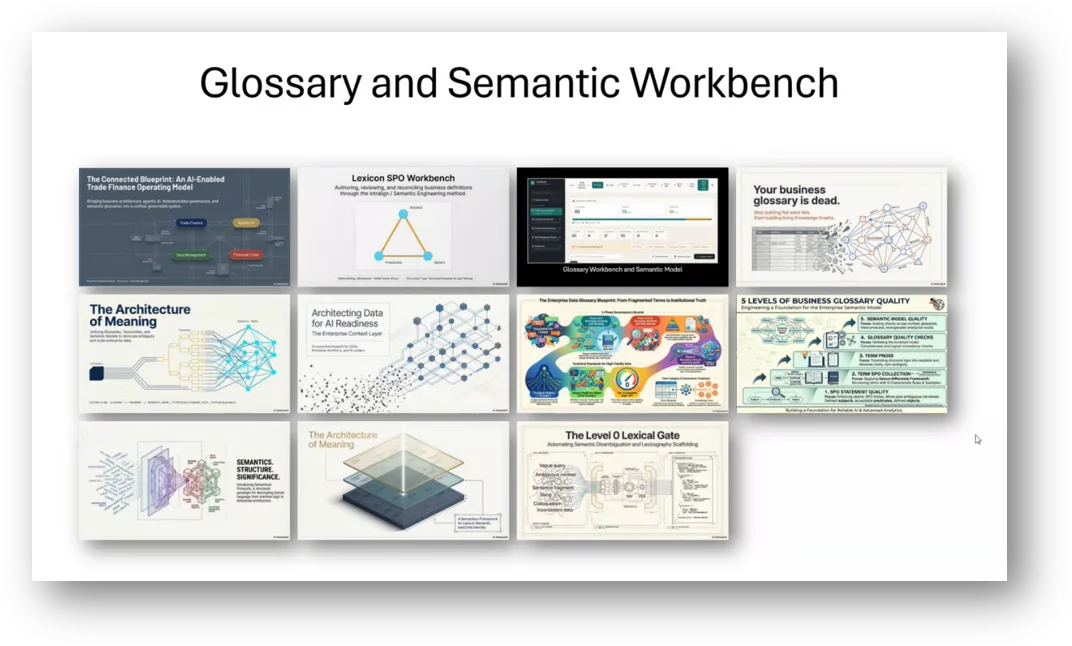
Figure 1 Glossary and Semantic Workbench Slide Deck

Figure 2 5 Levels of Business Glossary Quality
What is the Role of the Lexical Layer?
The lexical layer serves as an inventory system for physical text strings, isolating surface signs before any conceptual meaning is attached.
Data terms must be separated into three distinct phases: expressions, concepts, and reality. The lexical layer strictly handles expressions, capturing raw labels and surface signs—such as differentiating the strings “New York,” “NYC,” and “the Big Apple”.
Once expressions are uniquely identified and labelled, they move to the semantic layer to become concepts. Finally, they interact with the ontic layer, where concepts are mapped to physical reality and real-world data nodes.
Key Takeaways
- The lexical layer focuses exclusively on collecting physical character strings.
- Expressions (labels) are distinct from semantic concepts (meaning).
- The ontic layer anchors semantic concepts to actual real-world data.
FAQ
- What is the difference between the lexical and semantic layers? The lexical layer catalogues physical strings and surface signs, while the semantic layer defines the underlying conceptual meaning of those strings.

Figure 3 The Architecture of Meaning

Figure 4 The Map is Not the Territory, and the Ink is Not the Map

Figure 5 The Three Pillars of Information Identity
How does Data Context Affect Business Processes?
Data meaning must be preserved throughout business processes to prevent downstream misinterpretation by end-users and managers.
Enterprise systems function like a plumbing network where data acts as the water flowing through pipes. Every specific business process adds its own unique “colour” or contextual nuance to that data.
If data context is not strictly protected as it moves through various systems, multiple nuances can blend into the same data fields. Consequently, managers analysing downstream reports may misinterpret metrics because the original business colour was overwritten or lost.
Key Takeaways
- Business processes apply unique contextual nuances to raw data.
- System pipelines must protect data meaning to maintain report accuracy.
- Rushing data definitions destroys valuable downstream insights.
FAQ
- Why does data lose its meaning in enterprise systems? Meaning is lost when organisations fail to protect the original context—or “colour”—of the data as it flows from specialised business processes into centralised systems.

Figure 6 The Lexical Layer Isolates the Expression
How can we Resolve Polysemy in Language?
Polysemy—when a single word carries multiple distinct meanings—requires strict disambiguation to ensure data accuracy.
A single expression can easily fracture into contradictory interpretations. For example, the term “bank” can refer to a financial institution, a river edge, or an aviation manoeuvre. Similarly, a “party” could mean a social gathering, a political organisation, or a legal participant.
To solve this, data stewards can query lexical databases like WordNet alongside AI tools like Claude. These tools propose registered “senses” for a term, allowing users to lock in the correct domain-specific definition.
Key Takeaways
- Polysemy causes data confusion due to fractured word meanings.
- WordNet and AI tools can generate sense proposals for ambiguous terms.
- Disambiguation guarantees words align with their specific business context.
FAQ
- What is polysemy in data management? Polysemy occurs when a single data expression, such as “party,” has multiple valid interpretations that must be narrowed down for system accuracy.

Figure 7 A Single Expression Fractures into Multiple Meanings

Figure 8 Completing DAMA Lexical Inventory Strings

Figure 9 Lexicon: “Party”
How do Internal Lexicons Affect Business Terminology?
Organisations frequently rely on internal lexicons featuring localised definitions that deviate entirely from external dictionaries.
Different departments often modify standard terminology to fit unique business rules. For instance, a sales department might define a “sales customer” exclusively as someone who has completed a purchase, rendering external definitions inadequate. Data teams must establish a “local sense” to accommodate these internal vocabularies.
Once internal lexicons are established, they connect to the ontic layer. Here, semantic models are anchored directly to real-world instances in a graph database, ensuring a term like “customer” accurately maps to a specific identity like “John Smith”.
Key Takeaways
- Internal business units often require localised, custom data definitions.
- The ontic layer maps abstract semantic terms to real-world data instances.
- Graph databases help resolve synonyms and duplicate identities across systems.
FAQ
- What is the ontic layer? The ontic layer is the tier where structural semantic models are mapped directly to real-world data examples and physical database instances.

Figure 10 The Semantic Layer Captures Conceptual Relationships

Figure 11 Meaning Bridges Completely Isolated Expressions

Figure 12 The Ontic Layer Grounds Meaning in Specific Reality

Figure 13 The Short Circuit of Traditional Ontologies

Figure 14 The Semantium Shift: Managing the Full Stack

Figure 15 Scenario A: Multiple Expressions, One Reality

Figure 16 Scenario B: Exact Same Expression, Different Realities

Figure 17 Scenario C: Meaning Without a Referent

Figure 18 The Master Identity Diagnostic Matrix
How does Data Quality Depend on Human Observation?
Data quality is fundamentally driven by human observation, meaning the individual who originally captures the data dictates its core meaning.
Like witnesses to a crime, human biases and cultural viewpoints inevitably alter how data is initially perceived and recorded. Furthermore, syntax is changed by the data’s physical format—whether information is modelled in rigid table rows or flexible narrative paragraphs.
To overcome these human variations, companies must standardise language early. Organisations that use conceptual enterprise models during employee onboarding successfully align staff to a unified corporate vocabulary.
Key Takeaways
- The original human observer inherently owns the meaning of the data.
- Physical table modelling formats heavily influence data syntax and accuracy.
- Conceptual data models are highly effective tools for employee onboarding.
FAQ
- How does human bias impact data quality? Human observation alters data quality because individual perspectives and biases dictate how real-world events are interpreted and ultimately recorded into systems.

Figure 19 Lexicon: ” Word of Mouth”

Figure 20 Lexicon: Lexical Gate

Figure 21 The Level 0 Lexical Gate

Figure 22 Level 0 Lexical Gate Process

Figure 23 The Zero-shot Semantic Engine

Figure 24 Zero-shot Judge

Figure 25 Claude as a Zero-shot Semantic Judge
How is an Enterprise Lexicon Structured and Validated?
Building an authoritative enterprise lexicon requires a structured classification pipeline that categorises terms and maps their relational dependencies.
The classification workflow begins by querying external databases like WordNet for sense proposals, followed by validation through Anthropic’s zero-shot semantic judge. Terms are then assigned contextual anchors and categorised using Q6 facets, which classify words by “who, what, and when”.
Next, teams apply relational scaffolding to establish parent-child hierarchies and edge dependencies. Finally, terms are validated against contextual real-world examples before being committed as active within the lexicon.
Key Takeaways
- AI tools provide zero-shot semantic judgment for sense proposals.
- Q6 facets classify terms logically (e.g., categorising by abstract or physical).
- Relational scaffolding structures data through parent-child hierarchies.
FAQ
- What is the purpose of relational scaffolding? Relational scaffolding structures a business glossary by defining hierarchical relationships, such as parent-child dependencies and acronym groupings, between different terms.

Figure 26 The Semantic Airlock: Operationalising Formal Linguistics

Figure 27 The 8-step Disambiguation Pipeline

Figure 28 Payload Architecture: Deterministic Prompt Pattern

Figure 29 Step 1 – Ingestion & Sense Proposal: “Party”

Figure 30 Step 2 – Subject Area & Essential Concept

Figure 31 Phase 2: Structural Categorisation Funnel

Figure 32 Quant Class

Figure 33 Classifying Quant Class

Figure 34 Phase 3: Relational Scaffolding & Grouping

Figure 35 Quant Level, Type & Structural Variant, and Quant Edge

Figure 36 Phase 4: the Human Failsafe & Final Commit

Figure 37 Contextual Example and Committed
Can Automated Tools Accurately Understand Nuanced Semantics?
Fully automated glossary alignment tools often fail because they lack the ability to comprehend nuanced semantic contexts.
Testing automated approaches on terms like “data” reveals that AI can misclassify business concepts without human oversight. For example, automated agents might incorrectly classify “data” as a physical digital object rather than a temporal abstract concept.
This semantic precision becomes critical during corporate mergers and acquisitions. Failing to conduct semantic due diligence before dumping external systems into an existing architecture will destroy data integrity across the newly merged enterprise.
Key Takeaways
- Automated classification tools frequently misinterpret abstract business concepts.
- Human-in-the-loop oversight is required to finalise semantic definitions.
- Mergers require significant semantic due diligence to prevent system failure.
FAQ
- Why is semantic due diligence necessary during a business merger? Mergers combine companies with entirely different lexical definitions; without semantic due diligence, forcing incompatible data systems together destroys data integrity.
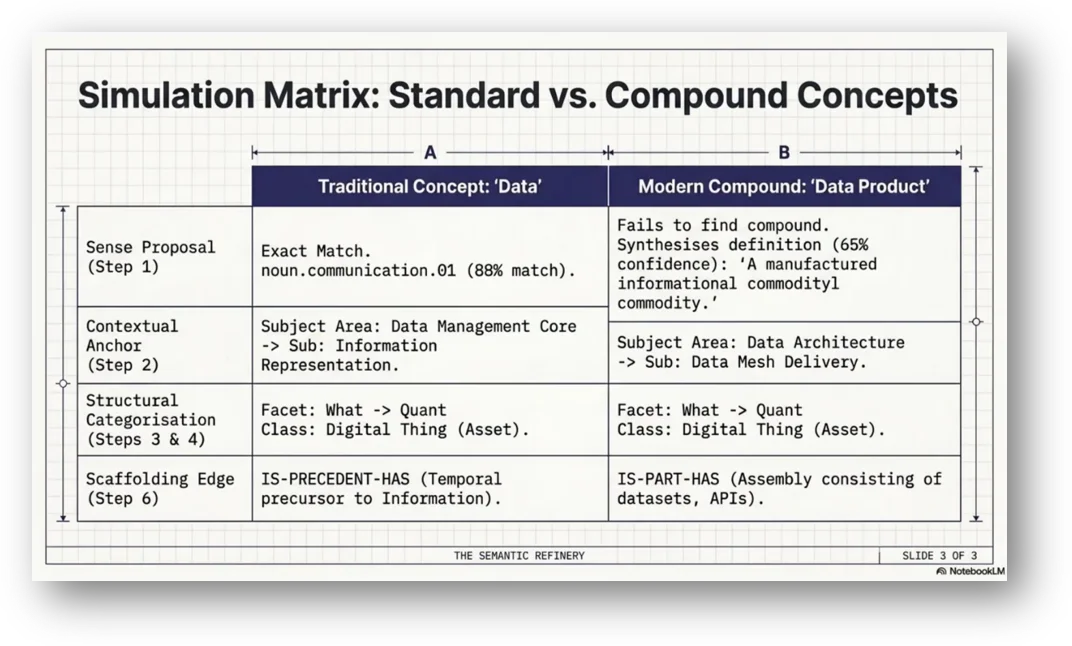
Figure 38 Simulation Matrix: Standard Vs. Compound Concepts

Figure 39 The Semantic Refinery: Output & Impact
How can Data Teams Gain Executive Buy-in?
To secure executive buy-in for semantic modelling, data teams must target localised business processes rather than attempting massive enterprise-wide overhauls.
Executives are rarely motivated by long-term, abstract architectural fixes. Instead, data professionals should build a business glossary for a single, problematic knowledge area to demonstrate immediate return on investment.
For example, a six-month alignment project at a central bank successfully resolved contradictory balance sheet definitions between merged banking and insurance branches. Utilising tools like a “consensus diamond” helps warring departments break down meanings and agree on shared metrics.
Key Takeaways
- Enterprise-wide semantic overhauls often fail to secure executive support.
- Targeting small, highly visible business processes proves immediate ROI.
- Consensus frameworks resolve departmental disputes over shared terminology.
FAQ
- How should data teams pitch semantic modelling to executives? Teams should avoid pitching multi-year enterprise projects and instead focus on resolving specific terminology bottlenecks in a single business process to prove immediate value.
- Key Takeaways
- Are Foundational Lexical Gates Often Overlooked in Modelling?
- What is the Role of the Lexical Layer?
- How does Data Context Affect Business Processes?
- How can we Resolve Polysemy in Language?
- How do Internal Lexicons Affect Business Terminology?
- How does Data Quality Depend on Human Observation?
- How is an Enterprise Lexicon Structured and Validated?
- Can Automated Tools Accurately Understand Nuanced Semantics?
- How can Data Teams Gain Executive Buy-in?


