
Key Takeaways
- Proper Sequence of Operations: First analyse data, then craft the story, and finally create visualisations for clarity.
- The Five Essential Questions: To communicate data insights, address what happened, why, future trends, recommended actions, and uncertainties.
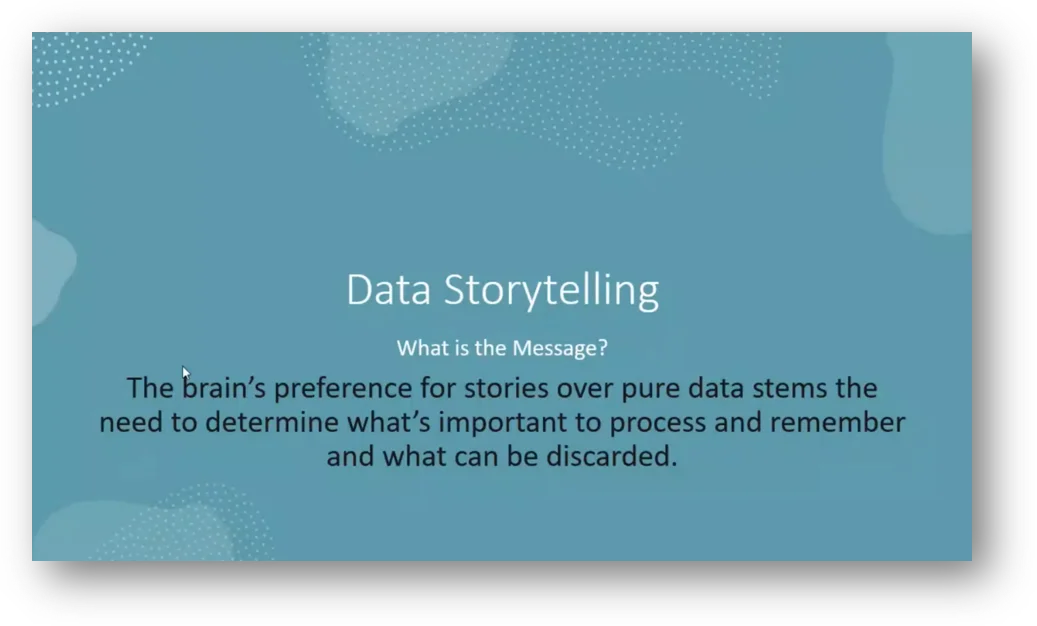
- Targeting Long-Term Memory: The brain processes stories better than raw numbers, aiding long-term memory retention effectively.
- Centring a Relatable Protagonist: An engaging data narrative needs a relatable protagonist to connect emotionally and inspire audience investment.
- Structuring Around Goals and Obstacles: A compelling story features a protagonist overcoming obstacles; similarly, data quality enhances decision-making success.
- Utilising Everyday Analogies: Technical issues can be likened to partners neglecting to manage a household budget effectively.
- Leveraging Universal Themes: Craft your narrative using universal themes to engage diverse audiences effectively.
- Addressing Unspoken Resistance: Organisational resistance arises from unvoiced fears; storytelling addresses anxieties, validates emotions, and fosters adaptability.
- Continuous Professional Development: More professionals are obtaining CDMP certifications, supported by comprehensive training in data management and governance.
Webinar Details
Title: Transform your Data Office to adopt a Vision and Value-Driven focus
Date: 2024-02-01
Presenter: Howard Diesel & Yule Oswald
Meetup Group: African Data Management Community
Write-up Author: Howard Diesel
What are the Key Questions in Data Storytelling?
Data storytelling functions as a crucial bridge between raw analytical output and strategic business execution. A common operational error is proceeding directly to data visualisation; however, the correct sequence requires professionals to first analyse the data, construct the narrative, and finally design the visualisations to communicate that story. To ensure a comprehensive analysis, the narrative must address five fundamental questions.
First, organisations must determine what occurred based on historical data. Second, they must identify the root causes or why these events happened. Third, predictive forecasting should address what is likely to happen if current trajectories persist. Fourth, the analysis must outline actionable recommendations regarding what should be done next. Finally, addressing what remains unknown prevents stakeholder overwhelm and fosters a secure environment for strategic engagement.
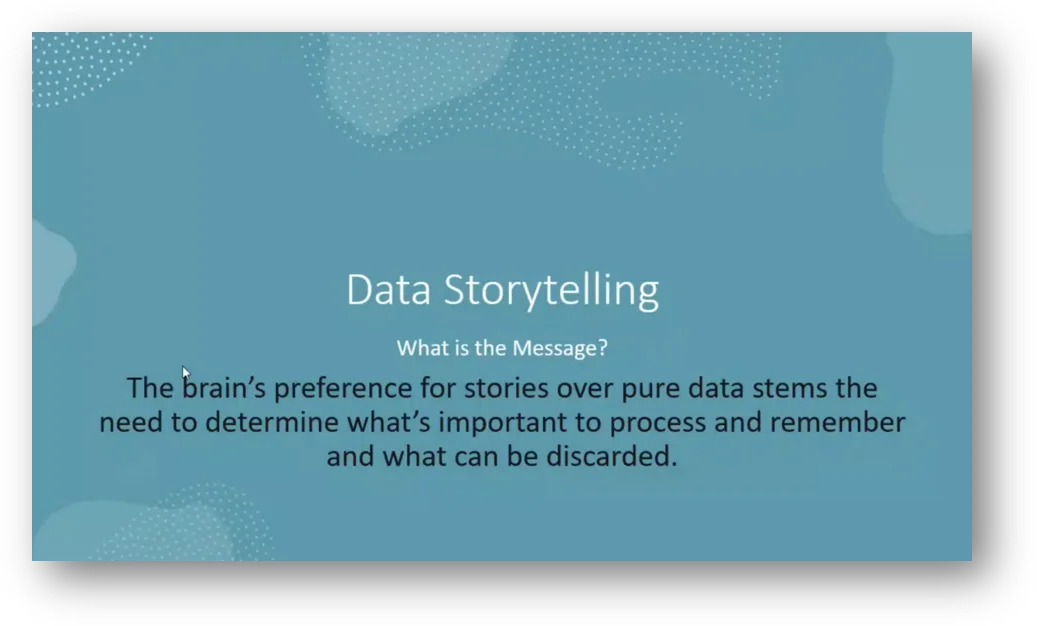
Figure 1 Data Storytelling

Figure 2 Three Key Components

Figure 3 Thorough Analysis: Five Questions
How does Storytelling Enhance Understanding of Complex Data?
In contemporary business environments, stakeholders are consistently inundated with vast quantities of complex information that demand actionable responses. When analysts present raw data and complicated charts without proper context, the human brain struggles to synthesise the information, often relegating it to short-term memory where it is quickly discarded.
Storytelling is an indispensable methodology that circumvents this cognitive barrier, delivering information directly into long-term memory by aligning with natural neurological processes. For example, presenting complex visualisations that illustrate operational outcomes without explaining the underlying causes can trigger severe executive frustration. To mitigate this, communicators must establish emotional connections with their audience, ensuring the analytical message resonates effectively and drives strategic action.

Figure 4 We All Have a Story to Tell
How can Narratives Help Employees Embrace Automation?
An effective narrative structure necessitates a central protagonist who deeply resonates with the intended audience. Consider the organisational challenge of motivating veteran accounting personnel to integrate automated systems into their daily workflows. Rather than relying strictly on technical software presentations, leadership can utilise an analogous narrative. One illustrative story features a traditional homemaker who initially perceives a newly introduced dishwasher as a threat to her established identity and domestic values.
Ultimately, she realises her professional worth is defined by her meticulous character rather than manual labour, allowing her to apply her skills to a successful business venture. This parallel narrative creates a psychologically safe framework for employees to process technological anxiety and recognise that automation does not diminish their professional competence.

Figure 5 Protagonist/Hero
How can Clear Goals Overcome Corporate Data Challenges?
A compelling narrative must establish clear goals for the protagonist while introducing significant obstacles that impede their progress. In cinematic examples like ‘The Lord of the Rings’, the protagonist’s primary objective is consistently challenged by adversarial forces, requiring determination and strategic alliances to achieve a resolution.
This precise framework applies directly to corporate data challenges, such as systemic data quality issues that generate friction between business units and IT departments. Both departments share the fundamental goal of enabling data-driven decision-making, yet they are hindered by the absence of formalised data management systems. The necessary solution involves implementing a governed, transparent approach to measure data quality, thereby eliminating departmental antagonism and establishing proactive early warning systems.

Figure 6 Exercise
How can Data Silos affect Organisational Communication Effectiveness?
Explaining intricate data management issues is often most effective when utilising relatable, real-world analogies. For instance, the failure to implement rigorous data procedures parallels a household failing to manage its financial budget. Without systematic financial tracking, significant relational tension emerges between partners, despite their unified goal of ensuring familial stability. In a corporate environment, this scenario perfectly mirrors the systemic risks associated with data silos.
When individual departments operate as isolated entities with proprietary communication standards, data loses its standardised meaning across the broader organisation. Resolving this dysfunction requires universal procedures and standardised communication to dissolve departmental silos, ensuring all teams operate from a singular, trusted foundation.

Figure 7 General Relevance

Figure 8 General Relevance Themes

Figure 9 General Relevance Themes pt.2
How can Universal Themes Enhance Data Narratives?
To optimise the impact of a data narrative, professionals should leverage “general relevance”—universal themes that resonate broadly across diverse demographics. Human cognition is fundamentally wired to engage with problem-solving narratives and conflict resolution, rather than isolated statistical reporting.
When framing complex business challenges, communicators should incorporate timeless concepts such as the instinct to protect one’s family, the struggle between opposing forces, or coming-of-age transitions. For example, elevating a company’s data management maturity can be conceptualised as a “coming of age” narrative, wherein the organisation transitions from immature practices to responsible, adult-level operations. By integrating these universally understood themes, data professionals can secure broader stakeholder engagement and ensure comprehensive narrative comprehension.
How can Storytelling Alleviate Resistance to Change?
A significant organisational hurdle is the pervasive resistance to change, particularly during the introduction of new technologies. Often, this resistance remains unspoken and is rooted in deeper psychological apprehensions concerning job security, comfort, or the potential loss of professional identity. Strategic storytelling functions as an effective mechanism to address these underlying anxieties.
Analysing successful marketing campaigns, such as the Adidas “Superstar” initiative, reveals the power of themes centred on individuality, freedom, and adaptability. By transforming a standard athletic product into a symbol of original identity, the narrative successfully inspired its target audience to embrace an adaptable lifestyle. Similarly, data narratives can facilitate organisational change by acknowledging employee concerns and demonstrating how adaptability fosters professional empowerment.
How can Storytelling Improve Corporate Data Visualisation?
Applying storytelling techniques in corporate environments does not require specialised creative writing expertise; rather, it demands a structured approach to asking relevant questions and identifying universal themes. A critical operational principle for data professionals is to remember that data visualisation must exclusively serve and support the established storyline.
By fully developing the narrative prior to creating dashboards, analysts ensure their visual outputs directly address the core business inquiries, thereby eliminating extraneous information. Recognising that these methodologies require significant cognitive processing to implement effectively, comprehensive multi-day training courses are actively being developed to assist professionals in mastering these structural narrative frameworks.
- Key Takeaways
- What are the Key Questions in Data Storytelling?
- How does Storytelling Enhance Understanding of Complex Data?
- How can Narratives Help Employees Embrace Automation?
- How can Clear Goals Overcome Corporate Data Challenges?
- How can Data Silos affect Organisational Communication Effectiveness?
- How can Universal Themes Enhance Data Narratives?
- How can Storytelling Alleviate Resistance to Change?
- How can Storytelling Improve Corporate Data Visualisation?


