
Key Takeaways
- Data literacy is an essential life skill: Data literacy should be recognised as a fundamental life skill, alongside reading and maths.
- Data is omnipresent in everyday life: Individuals engage with extensive data daily, using GPS, vehicle displays, grocery apps, and health trackers.
- Data is evidence, not absolute fact: Data should be seen as evidence to balance with values and experiences for sound judgments.
- Curiosity is the cognitive operating system: Processing data requires curiosity, questioning missing information, data sources, and underlying motivations.
- Scepticism mitigates manipulation: Consumers often face misleading data, like deceptive labels and distorted graphs, necessitating healthy scepticism.
- Early childhood education is critical: Nurturing foundational data skills from childhood counters reliance on virtual assistants and digital doom scrolling.
- Vulnerable populations require data protection: Raising data awareness in older populations helps protect them from financial scams and manipulation.
- Context and metadata are foundational: Accurate metadata and context are essential; errors can cause significant real-world issues like cargo misdirection.
Webinar Details
Title: Data Literacy Is More than a Workplace Skill — and That Changes Everything with Dave Wells
Date: 2026-06-08
Presenter: Dave Wells
Meetup Group: Book Launch with Technics Pub x MWS
Write-up Author: Howard Diesel
What Insights does Dave Wells Offer on Data?
Dave Wells possesses comprehensive expertise that spans the entire spectrum of data management, ranging from individual data citizens to executive-level architecture. His extensive career trajectory, which began as a COBOL programmer in the late 1960s, provides a unique vantage point on the industry’s evolution.
Having observed the exponential increase in computing power—transitioning from room-sized mainframes to modern mobile devices—Wells frames these technological advancements as progressive, interconnected steps rather than isolated leaps. This enduring fascination with the multifaceted nature of data establishes a robust foundation for his contemporary analyses.
Should Data Literacy be a Fundamental Life Skill?
Historically, discussions and literature surrounding data have targeted technical specialists; however, the ubiquity of modern data demands a paradigm shift. Driven by observations of younger generations entering the workforce and relatives operating in non-technical trades, Wells posits that the modern educational framework is deficient.
While schools emphasise traditional language and mathematics, they largely neglect data education. Consequently, data literacy must evolve beyond an exclusive workplace competency. It must be recognised and taught as a fundamental life skill, directly analogous to the essential nature of reading and writing in the previous century.
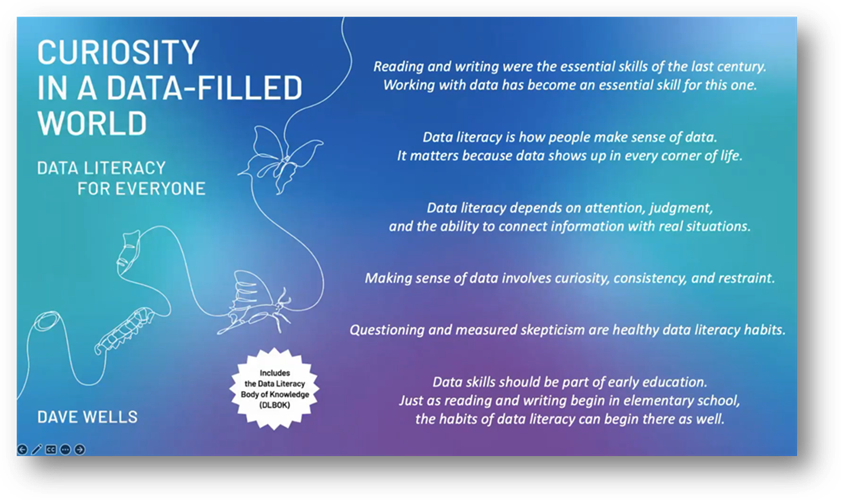
Figure 1 Curiosity in a Data-Filled World

Figure 2 Data in Everyday Life …
How does Data Shape our Daily Decisions?
The pervasive nature of data extends far beyond professional environments. Individuals frequently process numerous data points before even arriving at their workplace. Common examples include interpreting GPS navigation metrics—such as traffic congestion indicators and estimated arrival times—or monitoring vehicle dashboard instrumentation detailing fuel levels and mileage.
Furthermore, routine domestic activities like grocery shopping require the continuous analysis of pricing, nutritional labels, and tax calculations. Ultimately, data functions as a constant cognitive tool that seamlessly shapes daily human experiences and decision-making processes more significantly than traditional mathematics.

Figure 3 The Gap is Why this Book was Written
Is Data Literacy Essential in Everyday Life?
A prevailing misconception asserts that data literacy is confined to creating visual charts or pertains solely to specialised technical and financial analysts. Data interpretation is a continuous requirement across all spheres of human activity.
Data significantly influences personal domains through health applications and financial software, permeates social interactions via media promotions, and impacts civic engagement through unemployment statistics and political polling. Because data continuously influences individuals, often subconsciously, achieving comprehensive data literacy necessitates the rigorous application of critical analysis and curiosity across personal, social, and professional environments.

Figure 4 What is Data Literacy Is (and isn’t)

Figure 5 Data in Every Corner of Life

Figure 6 The Same Day, Three Perspectives
How can we Critically Assess Data Presentations Effectively?
Navigating a data-saturated environment requires the cultivation of critical scepticism. Consumers frequently encounter manipulative data presentations, such as nutritional labels that prominently display low caloric values while obscuring multi-serving container sizes. To mitigate deception, individuals must scrutinise the motivations of data curators and the methodologies behind data selection.
A crucial cognitive shift involves recognising that data represents curated evidence rather than incontrovertible fact; this evidence is occasionally incomplete or unfounded. Evaluating this empirical evidence against established personal values and prior experiences is essential for formulating intelligent, defensible judgments.

Figure 7 How Data Becomes Action
How can we Ensure Data is Properly Contextualized?
Raw data requires rigorous contextualization to yield actionable meaning. Evaluators must interrogate data origins, standardised definitions, and collection methodologies, maintaining an acute awareness that data records are inherently selective.
Analytical curiosity is crucial for identifying omitted information, deceptive visual representations, and skewed aspect ratios designed to manipulate trend perception. By integrating systematic questioning with contextual reality, organisations and individuals can transition away from strictly “data-driven” mandates, pursuing instead nuanced, “data-informed” decisions that synthesise empirical evidence with human judgment.

Figure 8 Finding Meaning in Data

Figure 9 Questioning Data and Meaning

Figure 10 Decision Making with Data

Figure 11 Communicating with Data
How does Data Awareness develop throughout Life?
The development of data awareness spans the entirety of the human lifespan. Foundational data literacy manifests in early childhood through fundamental categorisations, such as counting objects, observing physical patterns, or tracking progress via charts.
In professional contexts, data utility extends far beyond traditional office roles; trade professionals, including heavy equipment mechanics, frequently rely on sophisticated diagnostic data. Furthermore, establishing cohesive data awareness is critical for aligning disparate business functions, which simultaneously produce and consume data, thereby mitigating internal informational disconnects.

Figure 12 Data Literacy across Roles and Life

Figure 13 Growing Up with Data

Figure 14 Data in Every Workplace, Every Role

Figure 15 Everyday Habits of Data Literacy

Figure 16 Three Habits of Thinking

Figure 17 From Information to Insights

Figure 18 Stay Curious
Is Natural Curiosity Declining among Younger Generations?
There is a growing sociological concern regarding the diminution of natural curiosity among younger demographics, a phenomenon exacerbated by rapid digital consumption and reliance on automated virtual assistants for immediate answers. Fostering habitual, deliberate questioning from early childhood is proposed as a vital countermeasure.
Furthermore, the principles of human data literacy are intrinsically linked to the development of Artificial Intelligence. Proper AI implementation requires rigorous environmental modelling, integrating systems thinking and causal loop methodologies to manage preconditions and mitigate unintended consequences effectively.

Figure 19 Closing Slide
How does Data Awareness Protect Ageing Populations?
Comprehensive data awareness serves as a critical protective mechanism, particularly for ageing populations who are highly susceptible to data-driven financial manipulation and predatory scams. The discourse additionally underscores the foundational role of metadata in validating commercial and logistical information.
The absence or inaccuracy of metadata can precipitate severe operational failures, exemplified by misdirected international shipping resulting from omitted export flags or incorrect country codes. Ultimately, widespread data literacy empowers individuals across all demographics to proficiently manage, contextualise, and verify the information they encounter daily.
- Key Takeaways
- What Insights does Dave Wells Offer on Data?
- Should Data Literacy be a Fundamental Life Skill?
- How does Data Shape our Daily Decisions?
- Is Data Literacy Essential in Everyday Life?
- How can we Critically Assess Data Presentations Effectively?
- How can we Ensure Data is Properly Contextualized?
- How does Data Awareness develop throughout Life?
- Is Natural Curiosity Declining among Younger Generations?
- How does Data Awareness Protect Ageing Populations?


