
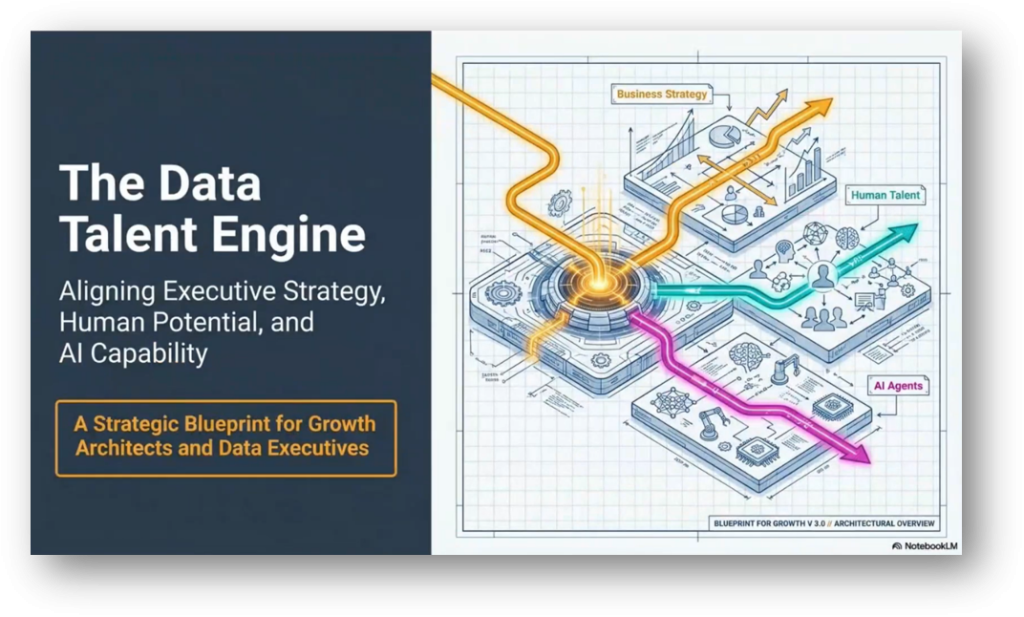
Key Takeaways
- Strategic Alignment and Value Creation: Align your initiatives with business strategy and be ready to show their financial impact in numbers.
- Balancing AI and Human Talent: Leaning on AI without oversight can build up hidden technical debt.
- Preventing Engineer Burnout: Turning skilled engineers into AI output-checkers is a fast way to lose them.
- The “Human-in-the-Loop” Necessity: Good AI integration still needs humans validating decisions and supplying context, so the system keeps learning.
- Optimising Talent Allocation: Match tasks to how people actually think and what they care about, not just their skills on paper.
- Hybrid Models for Customer Service: Blend human interaction with AI support to get the best customer experience.
- Driving AI Adoption via Productivity Wins: Quick, practical AI wins do more to win over hesitant executives than any pitch deck.
- Prioritising Deep Work: Cut payroll waste and protect uninterrupted “deep work” time if you want real productivity.
Webinar Details
Title: Data Talent Strategy for Data Executives
Date: 2026-07-23
Presenter: Howard Diesel
Meetup Group: African Data Management Community
Write-up Author: Howard Diesel
How do Data Initiatives Prove Financial Value?
A data executive’s main job is lining up data initiatives with the broader business strategy and then proving to leadership that they’re worth the money.
Too many corporate projects focus on technical delivery and software costs while leaving the business value vague. Getting real organisational buy-in means convincing the CFO, with real conviction, that data initiatives generate genuine economic returns.
Frameworks like the Deloitte Enterprise Value Map (EVM) help translate abstract data capabilities into financial value leadership can actually see. Show the economic impact clearly enough, and the whole strategy stops looking like just another IT cost centre.
Key Takeaways
- Align data initiatives directly to organisational business strategy.
- Use value-mapping tools like the Deloitte EVM to quantify return on investment.
FAQ
- What is the primary role of a data executive? To align data talent and initiatives with the organisation’s business strategy and clearly demonstrate financial value to leadership.
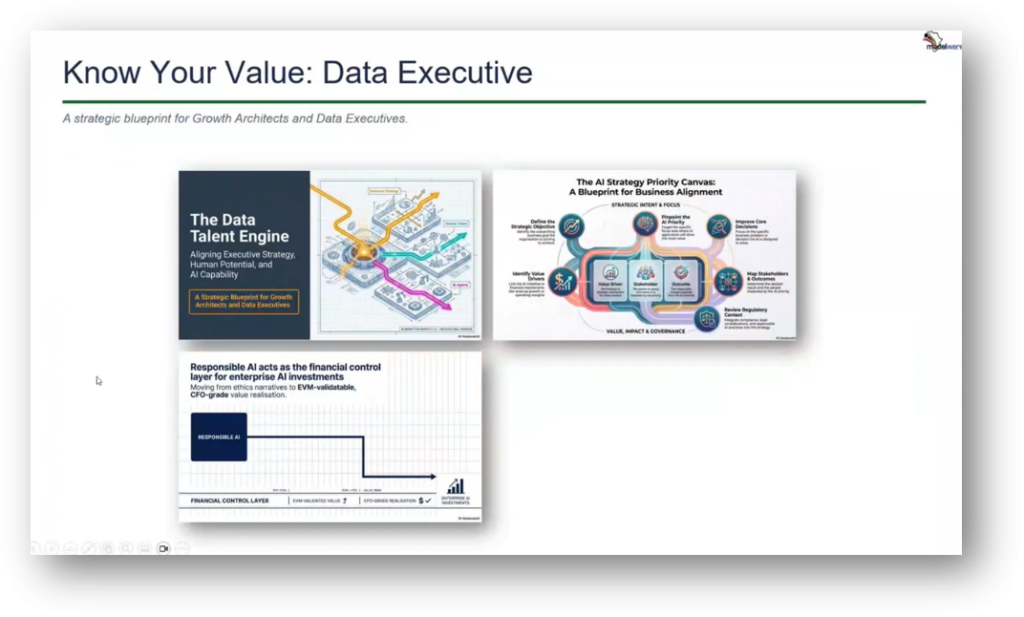
Figure 1 Know Your Value: Data Executive
Are AI Agents Replacing Human Engineering Teams?
More organisations are turning to AI agents to manage technical debt and supplement engineering teams, which is starting to reshape corporate hiring strategy.
Some companies are freezing headcount and deploying AI agents instead, to handle routine data engineering and clear technical debt. AI can speed up code generation a lot, but it comes with a real risk: technical debt that nobody sees coming, if the human team doesn’t fully understand what the algorithm actually produced.
Treat human teams as just a “ticket factory” for reviewing AI output, thought, and capability drains out fast. Skilled engineers burn out and leave if their whole job becomes validating and correcting what the AI produced.
Key Takeaways
- AI agents are being used to offset corporate headcount freezes.
- Unchecked AI code generation can create massive, hidden technical debt.
FAQ
- How does relying on AI agents affect human engineering talent? While AI boosts initial productivity, it can cause burnout and high turnover if top engineers are relegated to merely reviewing AI outputs.

Figure 2 The Data Talent Engine

Figure 3 The Gap Vs. the Metric
How does Data Strategy Connect Business Objectives and Use-cases?
A data strategy that actually works connects high-level business objectives to specific digital use cases, balancing strategic demand against both human and AI supply.
Building that alignment starts with an executive translating corporate objectives into daily data initiatives people can act on. Rather than just assigning tasks top-down, good data leaders let employees identify which strategic gaps they want to fill, which builds real ownership and points upskilling in the right direction.
Executing those use cases means growth architects assessing technical feasibility, mapping the human competencies already available and figuring out where AI communication tools, autonomous agents in platforms like Buzz, for instance, can close the remaining capability gaps.
Key Takeaways
- Map corporate business goals directly to digital use cases to define talent demand.
- Allow employees to choose the strategic data gaps they wish to solve.
FAQ
- What is the “alignment ecosystem” in data strategy? It is the structured process of matching corporate business demand (use cases) with the available supply of human professionals and AI agents.

Figure 4 The Alignment Ecosystem

Figure 5 Creating the Demand: the Executive View
How do Cognitive Styles Influence Employee Role Optimisation?
Optimising human supply requires mapping technical skills via the SFIA framework and matching individuals’ cognitive thinking styles to suitable organisational roles.
The Skills Framework for the Information Age (SFIA) helps leaders track how an employee progresses across competency levels, from basic application through to strategic influence. Technical proficiency alone doesn’t cut it, though; data executives need to look at psychometric profiles and cognitive thinking styles too.
An “abstract sequential” thinker tends to do well as a visionary analyst in data strategy, for instance, while a “concrete sequential” thinker thrives in tight operational execution. Someone with strong “abstract random” thinking, on the other hand, tends to excel at relationship building and change management. Position people according to these natural inclinations, and both performance and long-term career momentum tend to follow.
Key Takeaways
- Use the SFIA framework to chart clear career destinations for data talent.
- Align specific data tasks with natural cognitive styles (e.g., strategic planning vs. operational execution).
FAQ
- Why are thinking styles important in data management? Aligning an employee’s natural cognitive style with specific tasks ensures they are positioned for optimal performance and job satisfaction.

Figure 6 Mapping Human Supply: The Dual Path of Leadership

Figure 7 Profiling the Cognitive Supply
How can Organisations Lead AI Education Initiatives Effectively?
Integrating AI agents into corporate workflows requires a symbiotic relationship where human validators provide critical context to improve AI decision-making.
Getting real efficiency out of AI stretches modern data management practices, and it demands genuinely high-quality inputs and solid data governance. A “human-in-the-loop” workflow isn’t optional here: humans need to validate automated decisions and explain the context behind any override, so the agent actually learns from its mistakes.
Formal education systems are struggling to keep up with this shift, meanwhile. AI is advancing far faster than universities can update their curricula, which means organisations themselves need to take the lead on practical, data-aware AI education.
Key Takeaways
- Humans still need to validate AI-driven decisions and provide context for them.
- AI technology is currently advancing significantly faster than university training courses.
FAQ
- What is the “human-in-the-loop” approach for AI agents? It is a mandatory workflow where a human validates AI decisions and provides context when overriding errors, allowing the AI model to learn and improve.

Figure 8 The New Variable: Integrating AI Agents
How can Leaders Align Skills and Passions Effectively?
Effective data leadership requires utilising personality assessments and active coaching to match team members with tasks they are both skilled at and genuinely desire to execute.
Personality frameworks like Myers-Briggs help data teams understand different communication styles and how people collaborate. Growth architects need to go further than that, though, and align those psychometric profiles with specific data initiatives.
A real leadership challenge shows up when someone is highly skilled at a task but genuinely hates doing it. Good coaching helps find the overlap between what the business needs and what the employee wants to do. From there, mentoring can pair a skilled-but-uninterested employee with someone who has the passion but not yet the technical skill, so each teaches the other something.
Key Takeaways
- Use personality tools to improve team communication and structural task allocation.
- Do not force top-performing employees into repetitive roles they do not enjoy.
FAQ
- How can coaching improve data team allocation? Coaching uncovers what employees truly desire to do, allowing leaders to match business needs with individual passions rather than relying solely on baseline competencies.
How do Hybrid Models Enhance Customer Communication?
The matching engine strategically pairs AI agents and human talent to meet specific business demands, particularly in sensitive, customer-facing scenarios like insurance claims processing.
Organisations run into real customer backlash when AI bots handle direct voice communications, since clients want human empathy during stressful processes. Hybrid allocation models are how companies solve that friction.
In that setup, a human agent handles the direct customer interaction, while an AI agent works in the background, prompting the human with specific compliance questions, checking data quality, and running real-time anomaly detection. It balances the stability a human brings against the speed AI offers for risk triaging.
Key Takeaways
- Customers often push back hard against direct phone interactions with AI bots.
- Utilise hybrid models: humans manage front-end communication while AI handles background data validation.
FAQ
- What is a hybrid allocation model in customer service? A human representative manages the direct customer interaction while an AI agent works simultaneously to supply data prompts and autonomously check for operational anomalies.

Figure 9 The Matching Engine: The Growth Architect

Figure 10 The Hybrid Allocation Matrix

Figure 11 Pinpointing the Win-win Zone
How do You Demonstrate AI’s Immediate Productivity Gains?
Overcoming widespread leadership apathy toward AI requires demonstrating immediate, tangible productivity gains using accessible tools like NotebookLM and Claude.
Plenty of executive suites and HR departments are still fairly indifferent to advanced data training, treating employees as interchangeable parts. Shifting that culture and getting real buy-in means data leaders showing practical AI use cases that solve an immediate productivity bottleneck, not a hypothetical one.
Feed a massive regulatory document into a tool like NotebookLM, for instance, and staff can query thousands of pages instantly, getting exact legal citations and saving hours of manual research. Wins like that, immediate and administrative, tend to do more to convince hesitant executives and faculty than any amount of persuasion.
Key Takeaways
- Gain executive buy-in by demonstrating fast, undeniable AI productivity wins.
- Use AI applications like NotebookLM to query massive text documents instantly and accurately.
FAQ
- How can data leaders convince hesitant executives to adopt AI? By actively applying AI to urgent productivity issues—such as rapidly generating board presentations or querying large compliance documents—to prove immediate organisational value.
How can Organisations Reduce Non-value-adding Tasks?
Positioning employees in the “business value add” zone takes real priority: audit the non-value-adding corporate tasks and cut them back hard.
A sustainable data talent strategy keeps employees working at the intersection of their own growth and real business value. That takes genuinely protecting 90-to-120-minute blocks of “deep work” and keeping constant interruptions, emails, minor data requests, from eating into them.
It’s worth executives working out how much of the payroll goes toward non-value-adding administrative work. Use AI to take that work off people’s plates, and human talent stays focused on strategic initiatives, which raises the long-term value of the employee and makes sure high performers get seen.
Key Takeaways
- Protect deep work sessions (90-120 minutes) if you want real value generation.
- Routinely audit payroll to determine the specific financial cost of non-value-adding tasks.
FAQ
- What is the “value-adding zone”? It is a highly productive state where an employee’s deep work directly contributes to both their long-term personal development and tangible, measurable business outcomes.

Figure 12 Navigating Misalignment: the 3 Rs

Figure 13 Protecting Output: The Architecture of Deep Work

Figure 14 The ROI of Alignment: Recovering Capability

Figure 15 Synthesis: The Unified Data Talent Engine
- Key Takeaways
- How do Data Initiatives Prove Financial Value?
- Are AI Agents Replacing Human Engineering Teams?
- How does Data Strategy Connect Business Objectives and Use-cases?
- How do Cognitive Styles Influence Employee Role Optimisation?
- How can Organisations Lead AI Education Initiatives Effectively?
- How can Leaders Align Skills and Passions Effectively?
- How do Hybrid Models Enhance Customer Communication?
- How do You Demonstrate AI's Immediate Productivity Gains?
- How can Organisations Reduce Non-value-adding Tasks?


