
Key Takeaways
- The Core Problem: Enterprise data platforms have an 8% adoption rate due to complexity and lack of user focus.
- Defining a Data Product: A genuine data product is a solution designed to address specific business problems for users.
- Five Essential Characteristics: A successful data product needs clear purpose, ownership, quality, discoverability, and continuous evolution.
- The Data Product Spectrum: Organisations should scale data products progressively to avoid failure by skipping foundational levels.
- Starting with the User: Applying the “Jobs to Be Done” framework helps data teams understand user decision-making needs effectively.
- Delivering Business Value: Data initiatives should secure funding by focusing on cost reduction, revenue growth, risk mitigation, and strategy.
- Governance and Adoption: Data governance should automate decisions; product success measured by HEART: Happiness, Engagement, Adoption, Retention, Task Success.
- The AI Prerequisite: Reliable AI requires robust data; poor data quality leads to failed implementations and pilots.
- The 90-Day Action Plan: Phased 90-day plan: launch MVDP, establish governance, and scale portfolio effectively with minimal disruption.
- Context and Ownership Integration: Data product trust requires human context, semantic layers, and departmental ownership of definitions and quality.
Webinar Details
Title: Data Products: How to Design and Deliver Data Products People Actually Use with Amy Raygada
Date: 2026-03-23
Presenter: Amy Raygada
Meetup Group: Book Launch with Technics Pub x MWS
Write-up Author: Howard Diesel
How Does the Presentation Define a Data Product?
This webinar featured a presentation by Amy Raygada, a principal data and AI strategist with approximately 20 years of experience helping organisations translate data strategy into actionable business outcomes. Amy transitioned from software engineering to the data sector in 2011 and identified a systemic absence of product-oriented thinking within data teams. Her presentation delineated the shift from project-based data handling to a product-centric model, emphasising core concepts such as data ownership, governance, and business value. The agenda encompassed an analysis of failing data platforms, the definition of a data product, four primary implementation frameworks, the intersection of data products with artificial intelligence, and a strategic 90-day action plan.
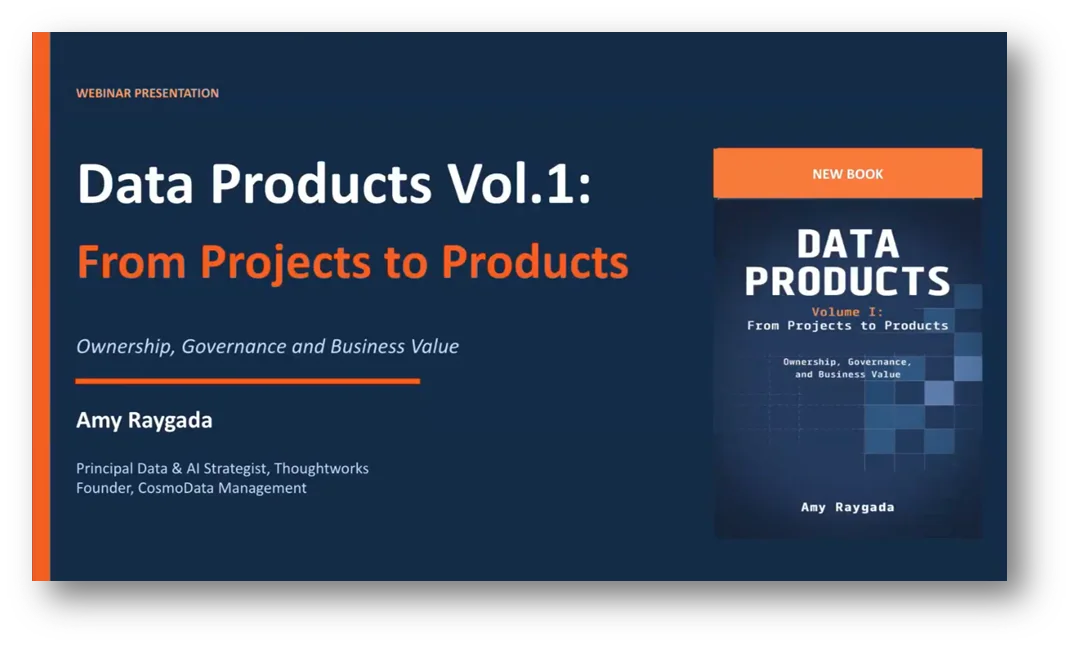
Figure 1 Data Products Vol.1: from Projects to Products

Figure 2 What We’ll Cover Today
Why do Technically Sophisticated Data Platforms Often Fail to Achieve End-User Adoption?
A recurrent issue in enterprise data management is the development of technically sophisticated platforms that fail to achieve end-user adoption. Amy illustrated this with a case study of an e-commerce firm that invested 12 months and substantial capital in a platform featuring streaming analytics and machine-learning pipelines. Despite its technical flawlessness, business stakeholders avoided the platform, citing its complexity and preferring familiar spreadsheet applications.
Amy categorises this phenomenon as “the Ferrari nobody drives”. The foundational error was a lack of product thinking; engineers developed solutions based on assumptions rather than actual user requirements. Consequently, enterprise data platforms currently have an average adoption rate of approximately 8%, indicating a significant misallocation of resources.

Figure 3 The Ferrari Nobody Drives

Figure 4 The Real Problem
What Defines a Data Product Beyond Just a Dataset or Pipeline?
The concept of a data product extends beyond merely renaming database tables. A formal data product is defined as a comprehensive solution engineered to address specific business challenges for targeted users, rather than merely a dataset or pipeline. An authentic data product must possess five defining characteristics. First, it must have a clear purpose, solving a defined problem for identified users.
Second, it requires explicit ownership to manage quality and expedite issue resolution. Third, it must ensure quality and reliability, ensuring users can trust the data without hesitation. Fourth, it must be discoverable, featuring clear documentation in business terminology. Finally, it must undergo continuous evolution, incorporating version management and active feedback loops.

Figure 5 What is a Data Product, Really?

Figure 6 5 Characteristics of Real Data Products
How can Foundational Datasets Impact the Efficacy of Advanced AI Systems?
Data products operate across a spectrum of complexity, necessitating careful strategic alignment and investment. Level 1 comprises foundational elements, such as clean, thoroughly documented datasets and essential reporting functionalities. Level 2 introduces interactive capabilities, including guided exploration and dashboards, which democratise data access. Level 3 integrates embedded machine learning, such as recommendation systems and demand forecasting, directly into operational workflows.
Level 4 encompasses advanced, real-time, context-aware artificial intelligence systems. A pervasive strategic error is attempting to implement Level 4 generative AI technologies without first establishing the robust data foundations required at Levels 1 and 2, ultimately compromising system efficacy and wasting capital.

Figure 7 The Data Product Spectrum, where are you?

Figure 8 Framework 1: Start with Users, Not Data
Why is it Important to start with the User when Developing Data Products?
The primary framework for data product development is rooted in the “Jobs to Be Done” methodology, which mandates that the process begin with end users. Stakeholders do not inherently desire to execute technical queries; rather, they seek to resolve specific business complications. Implementing this framework requires data teams to achieve granular clarity regarding user context, operational needs, and the criteria for success.
For example, user research may reveal that a marketing manager simply requires a 30-second assessment of customer lifetime value trends, rather than a complex, multi-metric dashboard. Acquiring these insights necessitates conducting five to seven structured user interviews per group and observational shadowing to accurately bridge the discrepancy between stated requests and actual operational requirements.
What are the Four Primary Domains of Business Value Derived from Data Products?
To ensure sustained executive sponsorship, data teams must transition from linear data processing models to a comprehensive data value chain. This paradigm focuses on converting raw data into products that inform user decisions, thereby generating measurable business impact. Business value derived from data products can be categorised into four primary domains.
The first is cost reduction, achieved through operational efficiency and automation. The second is revenue growth, facilitated by tools such as recommendation engines that enhance average order values. The third is risk mitigation, which addresses regulatory compliance to prevent substantial financial penalties. The final domain is strategic options, encompassing platform capabilities that accelerate operational turnaround times and create future business possibilities.

Figure 9 Framework 2: the Data Value Chain
How can Optimal Data Governance Function as an Enabling Rather than a Restrictive Constraint?
Optimal data governance must serve as an enabling function rather than a restrictive constraint. Organisations should prioritise automating foundational governance layers, such as infrastructure controls, automated data cataloguing, and quality monitoring. Automating these decisions ensures consistent scaling without impeding development velocity. Furthermore, evaluating the success of data products requires robust adoption metrics, for which the HEART framework is highly applicable.
This methodology evaluates user Happiness via sentiment surveys, measures feature Engagement beyond simple login rates, tracks initial user Adoption to identify onboarding friction, monitors long-term user Retention, and assesses overall Task Success to verify that the product effectively resolves the targeted business issue.

Figure 10 Framework 3: Governance that Enables, Not Constraints

Figure 11 Framework 4: Measuring Adoption: The Heart Framework

Figure 12 Why it Matters NOW: AI Doesn’t Replace Data Product Thinking, it Demands it
What does the 90-Day Action Plan for Implementing Data Products Look Like?
The proliferation of artificial intelligence strictly demands, rather than replaces, disciplined data product methodologies. AI systems systematically amplify both foundational capabilities and underlying data quality failures. Consequently, reliable AI implementation is fundamentally contingent upon high-quality data products; an organisation cannot achieve the former without the latter. To operationalise these concepts, organisations should execute a phased 90-day implementation strategy.
The initial 30 days must focus on establishing foundations and delivering a minimal viable data product to demonstrate immediate value. Days 31 to 60 should involve systematising implementation by defining strict quality and governance standards. The final phase, days 61 to 90, focuses on progressively expanding the data product portfolio, explicitly avoiding highly disruptive organisational overhauls.

Figure 13 Why AI Demands Data Products

Figure 14 You Cannot Have Good AI Without Data Products

Figure 15 AI Readiness Reality Check

Figure 16 Your 90-Day Action Plan

Figure 17 Key Takeaways
How can Semantic Layers Improve Data Validation?
A primary technical challenge discussed was integrating human context and tacit operational knowledge into data products, a task that can be facilitated by semantic layers and rigorous human-in-the-loop validation mechanisms to prevent AI hallucinations. Amy also addressed the complexities of establishing data quality ownership across matrixed organisations.
Participants evaluated methods for surfacing quality metrics and determined that tools like Great Expectations can effectively monitor technical data integrity, though business-specific anomalies require direct stakeholder input. Ultimately, securing precise, reliable data products necessitates shifting ownership of data definitions back to the originating business units, thereby mitigating interdepartmental friction.

Figure 18 “Start Tomorrow”

Figure 19 Establish the Organisational and Governance Foundations for AI-Ready Data Products

Figure 20 Let’s Connect – Amy Raygada
- Key Takeaways
- How Does the Presentation Define a Data Product?
- Why do Technically Sophisticated Data Platforms Often Fail to Achieve End-User Adoption?
- What Defines a Data Product Beyond Just a Dataset or Pipeline?
- How can Foundational Datasets Impact the Efficacy of Advanced AI Systems?
- Why is it Important to start with the User when Developing Data Products?
- What are the Four Primary Domains of Business Value Derived from Data Products?
- How can Optimal Data Governance Function as an Enabling Rather than a Restrictive Constraint?
- What does the 90-Day Action Plan for Implementing Data Products Look Like?
- How can Semantic Layers Improve Data Validation?


